skip to main |
skip to sidebar

"Free for All: Oddballs, Geeks, and Gangstas in the Public Library"
Don Borchert
Virgin Books, $21.95
Don Borchert was able to do what some of us only talk about.
He wrote down his experiences with some of the oddballs he encountered and turned it into an entertaining book that provides some insight into life on the other side of the library counter.
"Free for All: Oddballs, Geeks, Gangstas in the Public Library" is a compilation of Borchert's memories of working in a public library near Los Angeles. And his experience is just as the title suggests — a library is free for all, so there are plenty of oddballs, geeks and gangstas who assemble. And they provide quite the fodder for Borchert's book.
There's Henry, who isn't quite right in the head and comes in every day to work on the crossword puzzle in the Los Angeles Times. There's Terri, the children's librarian with a heart of gold who unintentionally befriends everyone, from the 'tween girls doing their homework to the mentally incapacitated Michael. There's Mr. Jackson, who expects the librarian checking out his books to stack them in alphabetical order and put the receipt in the second book from the top, sticking out no more than a half an inch. Not to mention the two men who were caught dealing drugs via a vent in the men's rest room.
Anyone who has worked with the public will appreciate and relate to Borchert's commentary on the comedy everyday people unknowingly bring to life.
Borchert also sheds light on what seems to be the obvious — libraries will lend you thousands of dollars worth of materials, no questions asked, so pay your damn $2 fine! (He has motivated me to pay a visit to my hometown library and pay the $0.40 in fines I owe, while renewing my card that expired almost a year ago.)
The writing is simple; the chapters are short. The observations are obvious and entertainingly portrayed. Borchert has managed to make me both excited and anxious for a career as a librarian.
However, I find difficulty in recommending this book broadly because I'm not sure how many people would be entertained by reading about the crazy antics occurring in the library. Many people find libraries boring and may subsequently be bored by this book, simply based on it's setting.
The book is amusing and clever and charming, but it will never receive the praise or readership it deserves. Because it is about life in the library.

"The Choice"
Nicholas Sparks
Grand Central Publishing, $24.99
Nicholas Sparks is at it again in his latest novel, "The Choice." Surprise, surprise, this book is a love story in which the man and woman must overcome an obstacle to figure out how strong their love is.
Travis Parker is ever the bachelor, whose world is turned upside down when he meets Gabby Holland. She is the uptight Southern belle hoping to break out of her shell, and Travis is the motorcycle-riding surfer to help her do so. Of course, Gabby has a boyfriend and must decide between the two — she must make "the choice." (And anyone who has read Nicholas Sparks, or even those who haven't, can predict the choice she makes.)
But that is only the choice in "Part One." "Part Two" includes an arguably more difficult choice, one that makes reading that far into the book actually worth it.
Sparks writes in third person, but the problem comes with who is telling the story. Sometimes it's Travis, sometimes it's Gabby. The person who tells the story is whoever is the most convenient person to tell the story at that time, without any rhyme or reason as to why the switch. The book is framed as though it's from Travis' perspective because he tells the prologue and starts the book, then Part Two is entirely Travis, as is the epilogue. The only reason Sparks even has Gabby tell any of the story is to illustrate how she is faced with "the choice," because how would Travis know what is going through her mind?
But Sparks definitely did not choose the best way to tell the story. Part One is only a flashback to 11 years earlier, and the reader finds out in Part Two that it was Travis' flashback — so how was the story being told from Gabby's perspective?
If the reader can look past that, it is difficult to get through the 180 pages that constitute Part One. It's a boring love story, typical to Sparks' novels. The story could have been stronger if the book was set up more like a Jodi Picoult novel — beginning in the present and flashing back to the incident 11 years earlier that brought the characters to all of the choices they have to make. Reading those 180 pages is painfully boring because there is no noticeable reason to do so.
Getting to Part Two is only rewarding because the book actually gets exciting. But then the story suffers. Sparks includes more story in those 72 pages than in the rest of the book, weakening the ending because there is not enough space to cram in everything he still has left to say.
Sparks also hammers the choice theme throughout Part Two — reminiscent of the way a college student might try to hurry up and finish a final paper by using the key words as many time as possible. It gets redundant, and again, the ultimate choice and outcome of the book are predictable.
The worst choice in the book is made in Part Two. Human nature is to see the characters who make the poorest choices suffer the worst punishments and learn from it, but the character making this choice hardly seems to see any sort of reprimand for the decisions made because Sparks had to hurry up through that part to finish the story.
I can only guess that Sparks took so long to get to the point of his novel because he wanted to have a major plot twist in the end. Sparks' fans will be shocked and fascinated and fall in love with the novel, but it's boring to those of us who have grown tired of his bland language and love-trumps-everything theme.
You can make a better choice than reading this book.

"Water for Elephants"
Sara Gruen
Algonquin Books of Chapel Hill, $13,95
"I'll do just about anything. But if possible I'd like to work with animals."
"Animals," he says. "Did you hear that, August? The lad wants to work with animals. You want to carry water for elephants, I suppose?" (57)
Sara Gruen opens her novel "Water for Elephants" with a quote from Dr. Seuss' book "Horton Hatches the Egg":
I meant what I said, and I said what I meant ...
An elephant's faithful — one hundred per cent!
"Elephants" lives up to that, leading me to wonder if it served as inspiration for the story.
The novel begins with a prologue, which is actually a shortened version of the climax, then brings the reader up to now, where the main character, Jacob Jankowski, is a 90something confined to a nursing home. When he learns the circus is coming to town, he flashes back to his days as part of a traveling circus.
Jacob's story starts during the Great Depression, when he is studying to be a veterinarian at Cornell. As he is preparing to take his final examination, his parents die in a car accident, leaving him with no money and no job, as he had planned to join his father's practice. And so, in what sounds like something that could only happen in a story (but certainly actually happened during this time), he Jacob runs off to join the circus.
Jacob doesn't intentionally join the circus, however. He jumps a train that just happens to be a circus train, and he just happens to be able to get a job working with the animals. During his time with The Benzini Brothers Most Spectacular Show on Earth, Jacob finds an enemy in the head animal trainer (August), a friend in the dwarf clown (Walter), and a love in the star performer (Marlena).
Life in the circus changes when Uncle Al, who runs The Benzini Brothers Most Spectacular Show on Earth, modifies the travel schedule to pick up an elephant when another circus collapses. Rosie joins the show, and Jacob immediately falls in love with the animal. While most of the workers, such as August, think Rosie is dumb, Jacob sees her intelligence and develops a connection with her.
Although Gruen begins her novel with the climax, little is given away because of the omitted details. I didn't understand her reason for doing it when I began reading, nor did I know when this scene would play into the book. But Gruen was smart in doing this because it sets the primary scene for the novel: the midway at the circus, with the greasy fry cook and the wild animals and the loyal roustabouts — the workers who are lowest on the totem pole but will do anything to help out their friends. And because she jumps from the prologue into 90something Jacob in the first chapter, it can be read as if it is a dream Jacob is having — a flashback to the moment that changed his life 70 years earlier.
Gruen fills her novel with historically accurate details of life on the circus train, and each circus chapter is accompanied by a photograph of 1930s era circuses. The pictures in addition to the author's colorful descriptions give the reader a sense of the sights, sounds and smells of everything Jacob experienced. The research put into the book truly paid off because it made the story come alive.
Jumping back and forth between 90something Jacob and 20something Jacob is slightly distracting from the plot of the primary story. The only reason I can figure 90something Jacob even is important to the story is because his is the type of character a reader will wonder about after the story ends.
Gruen's characters are likable and hateable, and in hindsight, predictable. Rosie, especially, serves an important role in the novel, carrying out actions to create scenes that never would have been possible without an elephant in the book.
Because I attempt to predict how the novel would end, I was disappointed when I got there. It was not the same way I would have liked to see Jacob's story end (or begin, depending on how you look at it), but I suppose it was fitting for how he got to be where he ended up.
Overall it is a good book, a colorful story. I would have structured it differently, but then again, I never would have been able to think up a plot like this.
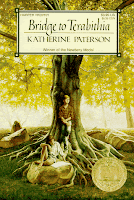
"Bridge to Terabithia"
Katherine Paterson
HarperTrophy, $6.99
I read "Bridge to Terabithia" in sixth grade, and I remembered crying to myself in the classroom, while pretending I wasn't so I wouldn't be embarrassed among my fellow 11-year-olds.
After the 2007 movie adaptation was released, I decided I would read it again before seeing the film, especially because it hadn't been too well-received, and I didn't want a poor theatrical version of the story to taint my memory of the novel, which had faded in the 11 years since.
Katherine Paterson's "Terabithia" tells the story of 10-year-old Jess Aarons Jr., the third of five children — and the only boy — in a poor family in rural Virginia. After initial hesitancy, he befriends Leslie Burke — a rich tomboy whose family (mostly inexplicably) moves to a neighboring farm. The two create the secret, magical kingdom of Terabithia, for which they are the king and queen, while developing a close friendship.
As in most novels, tragedy strikes, and the characters take with them the lessons they had been learning and teaching one another throughout the story so they can persevere.
But because that is a simple, overused plot technique doesn't mean that Paterson doesn't succeed in using it.
She also finds success in her character development by using general, exaggerated stereotypes, and in her foreshadowing by giving clues that might have been too far over my 11-year-old head but far too obvious for any adult.
"Terabithia" has landed itself on banned books lists for the subject of death, the use of the word "lord" and the promotion of secular humanism, according to Wikipedia. Added to that list could be the use of inappropriate language throughout the novel and the inclusion of topics like child abuse. What the banned book list makers seem to fail to grasp is the notion that 10-year-old children are exposed to death and swearing and abuse, and have imaginations that create worlds outside of the "safe" ones where the banned books list makers pretend death or swearing or abuse don't exist.
Paterson was able to step into the shoes of a fifth-grader when she wrote "Terabithia." She analyzes the important things of the world, like winning a foot race or making sure the seventh-grade bully doesn't take your lunch money. Paterson also is able to bridge the gap between how kids and adults deal with tragedy. She runs through the "what ifs" that all adults imagine after experiencing a terrible event and assuming they are somehow responsible for its occurrence, and she is able to see the event through the eyes of a 10-year-old who doesn't know how to respond without the full understanding of what has happened.
There is a reason this novel won the Newbery Medal. And if you haven't already — or if it's been a while since you've done so — you should pick up the book and discover why.

"The Time Traveler's Wife"
Audrey Niffenegger
Harcourt, Inc., $14
According to the book's jacket, "The Time Traveler's Wife" is "A most untraditional love story ..." and that might be the best way to explain it.
Audrey Niffenegger's novel tells the untraditional love story of Clare Abshire and Henry DeTamble. The pair are eight years apart. But because Henry is a time traveler, Clare meets Henry when she is 6, and Henry meets Clare when he is 28. So Clare grows up knowing who she will marry, and Henry has no clue of Clare's existence until he is 28.
They meet in real time and fall in love, and they go through the same troubles that all couples face. But their troubles are complicated, due to the fact that Henry disappears randomly to unknown places and times for varied periods of time. He travels most often when he's nervous, and finds himself naked, hungry and nauseated during his trips, not to mention lost and confused. And after he meets Clare in present time, he leaves her alone, confused and wondering when he will return:
Now I wait for Henry. He vanishes unwillingly, without warning. I wait for him. Each moment that I wait feels like a year, an eternity. Each moment is as slow and transparent as glass. Through each moment I can see infinite moments lined up, waitin. Why had he gone where I cannot follow? (vii)
Niffenegger doesn't follow traditional rules of writing. The book is filled with run-on sentences, so you feel as though you are having conversations with Henry and Clare rather than reading a book, and somehow the blending of thoughts into lengthy breaths makes them easier to read. She also doesn't tell the story chronologically, for obvious reasons, but rather in a way that seems to make sense — telling the different vignettes of Henry's and Clare's lives in the order in which the reader would learn about them as though they were an aside, a flashback, but most of the time, they are told in the present while Henry is time traveling.
She takes real events and real places and gives her characters real problems to deal with — school, money, jobs, life, death, sex, drugs, rock 'n' roll, alcohol, cancer, AIDS — and the not so real problem of time travel, which is made real by the details with which she explains the incidents during Henry's travels.
Niffenegger's story is somehow believable, her characters lovable. Readers will find themselves attached to the couple they want to see succeed though they are dealing with the most difficult obstacle to overcome.
"The Time Traveler's Wife" is proof that the magic of love can triumph over hardships and time. It's nice to see a story of love having the ability to conquer all in a world with just too little of it.
"Nineteen Minutes"
Jodi Picoult
Artria Books, $26.95 (hardcover)
Because of the recent devastation in Blacksburg, Va., I can't decide if reading a book that delves into the why of a school shooting is more comforting — giving a window into the mind of a killer to show how it all started — or depressing — knowing that there might not be anything to stop this from ever happening again.
"Nineteen Minutes" is Jodi Picoult's 14th novel. She tells the story of the storybook town of Sterling, N.H., and how the high school and the town are devastated when one of the students goes on a shooting rampage that lasts 19 minutes and results in 10 deaths, 19 injuries and an untold number of lives changed forever.
As is Picoult's style, she focuses her story on multiple characters and their relationships with each other. There's Josie, whose single mother Alex has worked her way up to being a judge, but has failed at providing a family life for her daughter. And there's Peter, the social outcast who has never lived up to be as good as his brother Joey, even though mother Lacy has given him love and support.
Josie is like any other teenager, trying to find her niche in high school life, but perhaps only finding that the only way she fits is to pretend to be a person she is not — pretending to be the person her "friends" want her to be. She is in the popular group. Her boyfriend is a varsity hockey player. She is pretty. She is skinny. She is unhappy.
Peter and Josie used to be friends — until Josie realized that it was easier to make fun of Peter with everyone else in the school, rather than to try to defend him and be his friend. Peter drifts into the cracks of high school. And in 19 minutes, he gets revenge.
Picoult often tells her books by starting at the beginning and telling the stories by way of what is currently happening and flashbacks to other events that have affected the way things are now. Because of the nature of this story — the crime, the impending trial, the mystery of what really happened that day — it closely resembles her 1998 novel "The Pact" (the same defense lawyer and investigator even return to this novel). The past and the present meet in the final chapter, when the whole story of the crime is told. And like Chris Harte in "The Pact," we know that Peter Houghton is guilty the whole time we are reading — what we don't know is how the defense, prosecution and jury will interpret the word guilty.
But it is disturbing to think that something as insane and disheartening as a school shooting could be the logical conclusion of any turn of events. No person who is mentally stable and balanced could even consider committing any sort of destruction of that magnitude. This is where Picoult is genius. She takes topics that are difficult to talk about and gives them a story, a start for a discussion. This is how everything started, this could be the cause of all school shootings. And, like in most of her stories, she cannot give a solution because the problem is not black and white, and too many shades of gray make it impossible to come up with any sort of simple fix.
I usually have few or no complaints about Picoult's work because she ties up all the loose ends, and everything she writes has a reason that might only appear later in the book. However, this time, I found inconsistencies — most notably when she mentions a boy in the room for the prosecution's witnesses, only to have another boy talk about watching him die the day of the school shooting. And I don't know if she ran out of time or space or couldn't find the place most appropriate to put it, but there was never any reason given for why some of the students became casualties of Peter's rage.
The end of the book is unsettling. She takes less than three pages to discuss how things are one year later. And she only needs that much space because nothing has changed — the social hierarchy remains, the nerds are pushed aside from the popular kids, there is no cohesion in the school that had witnessed a tragedy a year earlier. And that might be even sadder than the fact that it happened at all.
"A Density of Souls"
Christopher Rice
Pan, $13.00
If Christopher Rice's parents weren't famous, I fail to see how he would have had a New York Times bestseller with "A Density of Souls"
His novel is the story of four friends. And their parents. And their teachers. And their classmates. And their lovers. The story follows them from pre-puberty up to their early 20s. And like any over-dramatic story, it includes love, friendship, alcohol, violence, hate, abuse, alcohol, sex, psychiatric hospitals, alcohol, alcohol poisoning, guns, death, rebellion, natural disasters and alcohol.
Basically, it's a soap opera squeezed into 288 pages. If that description turns you off from reading it, you're welcome for saving a few hours of your life that you might have otherwise spent gasping at the ridiculousness of this novel.
Every event that happens in the story is painted up through excessive description and dramatic dialouge as if what has just occurred will change the world:
Then Meredith heard it. A human, female wail, a torrent of vocal pain she had never heard given breath before. Meredith felt the wail pass through her body. She trembled. For a brief instant, it was as if the sound had ripped the black veil across Meredith's own grief.
An ambulance's sirens devoured the woman's screams. (91)
The characters yell and fight in conversations that would be discussed in a normal tone of voice in real life. They drink alcohol as much as they inhale oxygen. They fight and hit and punch as if they all have anger control problems — except for one character who mostly chooses to drink bottles of Stoli every night while writing in a secret journal, presumably hidden under her mattress (yeah, like anyone's ever NOT checked there for a diary).
Rice jumps around with his primary character, the one who is telling the story. While it would make sense for him to switch between the four characters who are supposed to be the stars who share a secret, he also jumps to the mom, the brother, the teacher, the jock — but they only tell the story while they are necessary to be in it.
Rice's book asserts that the jock would not exist if it were not for the homosexual because he needs him to be his opposite in the social order to prove his dominance. He shows this in the typical, generic high school way, where the jocks tease the homosexuals and call them names. But he also brings in a more disgusting, sexual description of how the social relationships between these two groups work, going too far with even the idea of that being a normal activity and with the graphic description of what happens between the boys.
A good story has developed, meaningful relationships between the characters because those are what keeps the reader interested in what happens to them. But the relationships between the four main characters is hardly explained. The only reason we learn anything about those friendships is because they are explained in the final section of the book — if the reader even makes it there.
Rice tries to pull the reader in by saying things such as Meredith will hurt Brandon if he ever goes near Stephen, and Meredith knows there's something about the boys that will always leave her out of the group, and Stephen knows the secrets about Brandon and Greg, and Jordan knows something is going on with Brandon but Elise won't tell him where he is, and more and more and more and more. Rice hides all of these secrets until the end of the book, but, just as with a soap opera, it wouldn't be hard to walk away in the middle of the story without missing what you didn't know about them or where they will go next.
The book is drowned in alcohol and depression. The only reason I could find to read it is so you can laugh at the ridiculousness of the drama and the way the characters yell and overreact about every event they encounter.
New York Times Bestseller? Really? Maybe it's easier to make that list than I thought. Maybe all you need is a famous last name.
"The World's Shortest Stories"
edited by Steve Moss
Running Press, $8.95
The world’s shortest stories, told in 55 words.
Some will make you laugh, some will make you gasp, some will make you think. Only a few I didn’t like.
It will make you wonder if you can write a story in 55 words.
A wonderful collection combined into the perfect coffee table book.
Read it.
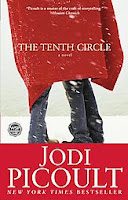
"The Tenth Circle"
Jodi Picoult
Washington Square Press, $15
As usual, Jodi Picoult does not steer away from controversial, sensitive topics in "The Tenth Circle," with topics such as rape, self destruction, lying, cheating and death gracing the 387 pages of her thirteenth novel.
Trixie Stone is 14 and heartbroken. Stay-at-home Dad Daniel knows something is different about his daughter, but he is hardly willing to accept that she is growing up and growing away from him. And he knows something is different about his wife Laura, who we meet in the middle of an extra marital affair in the opening pages of the story.
So like any teenager who is sad about her first love, Trixie wants to get him back and tries to do so by making him jealous. The boy ends up raping her — so Trixie says. How could she have known that he would only want her back for one night instead of back for good, even after she dressed up and flirted and did everything she thought was right in high school relationships.
Picoult fabulously paints the picture of a family who is hurting — the way their individual situations have affected them and the way it has affected their relationships with each other. I found myself being able to relate to each of them, recalling times when I had felt broken or had loved someone who felt broken and how that changed the dynamics of our relationship and how it felt to try to fix it.
Picoult's idea of the rape that might not have been a rape is fascinating. What other crime is there in our society that has physical evidence that could mean nothing but could mean everything, that is dependent on the interpretation of actions, words, the looks on the faces of the plantiff and defendant. Nothing could have worked better into her story because it reinforces the idea that the truth is in the eye of the beholder and changes every time a story is told, especially if the one who is holding the secret isn't sure if she is lying to herself.
Although I have criticized her in the past for spending too much time talking about the side stories, I found myself wanting more this time around. We learn about Trixie's best friend Zephyr, but her story tapers off in the end. We hear part of the Stone family's story from the detective Mike Bartholemew, who has his own depressing tale of losing his daughter, but we don't know if he finds any answers or gets any resolve through Trixie's story. Seth, the object of Laura's forbidden affection, might have played one of the most important roles in the novel, but he disappears as if he didn't matter — which, to the family, he didn't. And Willie, who offers Trixie help when she gets to her lowest, is only in the story long enough to help bring her back up.
Picoult says "The Tenth Circle" is not a departure from her usual, but I would disagree. Her other novels end when the story ends, but this one stops at the end of a story within the larger story. The Stone family makes their way to hell and back, but the demons are still there when they return home, and the reader will never know how they make it out of that fight.
But this had to be a departure from Picoult's usual. It was the first time I haven't cried when I get to the ending. This story wasn't my favorite, but it is one that I will remember.
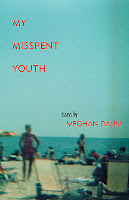
"My Misspent Youth"
Meghan Daum
Open City Books, $14
After painfully pulling myself through "The Quality of Life Report," I wasn't sure if I would ever want to read Meghan Daum again.
But I was pleasantly surprised throughout "My Misspent Youth" and have decided Daum is much more suited for writing nonfictional essays about the fortunes and misfortunes she has experienced than fictional novels about what she might wish to experience.
"Youth" is a collection of Daum's essays that have previously appeared in other publications, such as The New Yorker, GQ and Harper's. They are blunt. They are true.
Daum's writing is fresh. She is writing about herself and personal experiences without drowning the reader in first person pronouns.
She incorporates today's society, its expectations and how a twentysomething would conform in her writings. She discovers the ups and downs of finding love online in "On The Fringes Of The Physical World." She confesses her form of snobbiness through not being able to take a great deal of an apartment because of its one flaw in "Carpet Is Mungers." She searches for a definition of love and belonging in "According To The Women I'm Fairly Pretty."
The stories she tells don't always end, but she finds a way to finish telling them. The style allows readers to think about these ideas in their own lives, to fill in the spaces Daum has left. I could find myself in the stories she told — losing a relationship when the way to communicate changes; allowing disappointment with your bank account in order to be pleased with your everyday life; denying yourself love because someone can't fit the exact criteria of what you have planned in your life; falling in love where it will never work because of cultural expectations; finding success in something you always wanted but never did; dealing with grief when you're not sure if you're grieving.
The best stories are the stories that aren't just stories because they go beyond the realm of what is considered to be a story. They're the stories that are real. They're the stories that make you see, feel, believe. They're the stories you could see yourself writing, if you had the talent of Daum.


